
Transitions are a normal part of professional life. A new role, a different industry, or even a pause and restart, all of these can feel overwhelming. For women, there may be family considerations, self-doubt, or cultural expectations whispering that change is “too risky.” Add in the uncertainty of new environments, and it’s no wonder confidence…
But what if we reframed transition as not a threat, but an invitation?
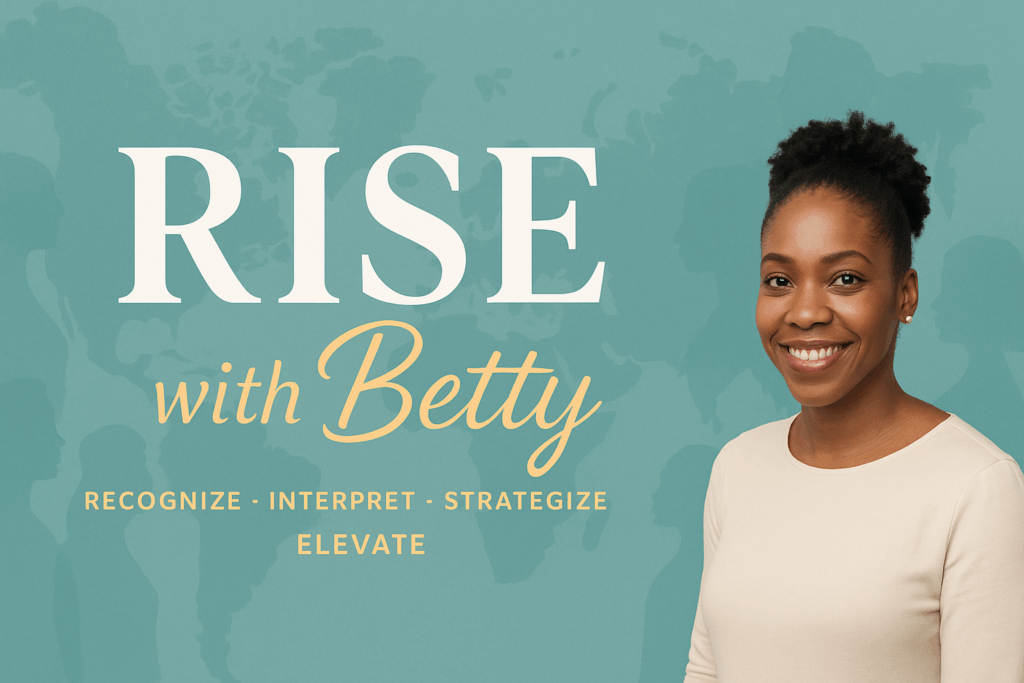
This is where the RISE Framework becomes a powerful guide. By Recognizing, Interpreting, Strategizing, and Elevating through transitions, women can move from uncertainty to confidence.
Step 1: Recognize What’s Changing
The first step in any transition is awareness. Too often, we rush forward without pausing to truly understand what’s shifting.
Ask yourself:
- What exactly is changing in my career right now?
- What fears or opportunities are rising with it?
- What strengths am I bringing into this new phase?
Recognition helps you separate what’s within your control from what isn’t, and that clarity alone builds confidence.
Step 2: Interpret the Meaning Behind the Transition
Transitions aren’t just about logistics; they often carry deeper meaning. Some women view career changes as setbacks, while others see them as fresh starts.
Reframe the story: Instead of “I’m starting over,” try, “I’m expanding my story.” This interpretation turns anxiety into empowerment.
Pro tip: Journaling or discussing with a mentor can help uncover what this change truly means for you.
Need Extra Support in Your Transition?
Don’t just read about it, apply it!
Download my free RISE Career Transition Tool and start turning change into opportunity today.
Step 3: Strategise with Intention
Confidence in transitions comes from having a plan. Strategy isn’t about predicting every outcome; it’s about creating anchors that guide you.
Your strategy could include:
- Skill building: Taking a short course or training for your new role.
- Networking: Reaching out to peers or mentors in your new field.
- Personal care: Building routines that protect your mental and emotional well-being.
With a strategy, uncertainty shifts into a roadmap.
Step 4: Elevate Yourself and Others
Transitions are not just survival tests, they’re opportunities to elevate. Share your journey with others, mentor someone going through a similar shift, or bring new perspectives into your team.
By elevating yourself through growth and lifting others as you rise, you anchor your confidence in something bigger than yourself.
Real-Life Example: Rising Through Transition
Consider Amaka, who moved from clinical practice to healthcare management. At first, she doubted if she had the “right” skills. Using RISE, she recognized her transferable strengths, interpreted the shift as an expansion of her influence, strategized by enrolling in leadership training, and elevated her impact by mentoring younger professionals.
The result? Not just a smoother transition, but accelerated career growth.
Key Takeaway
Career transitions will always bring uncertainty, but uncertainty doesn’t have to bring fear. With the RISE Framework, women can Recognize, Interpret, Strategize, and Elevate through change.
Remember: Transitions are not detours. They are launchpads to your next level.
Step Inside RISE™
Career transitions rarely fail for lack of effort. They stall when one thing is missing. Inside RISE is built on the C.A.R.E. Framework™ — the four domains that decide whether your transition succeeds by design, or stalls by default:
Clarity — name exactly who you're becoming, so the search stops feeling scattered.
Architecture — the habits, learning, and routines that hold the change up.
Resources — the energy, wellbeing, and relationships to sustain the climb.
Execution — turn the plan into visible, weekly progress instead of good intentions.
Your diagnostics, the RISE Report, the C.A.R.E. Assessment, and the 90-Day Transition Runway — all in one place. Free, and yours to keep.
Where is your career transition stalling?
Are you struggling to map your next career move, or are you having trouble identifying the right executive advocates to back your transition?
Click here to email me directly and share your context; I read and respond to every message personally.