
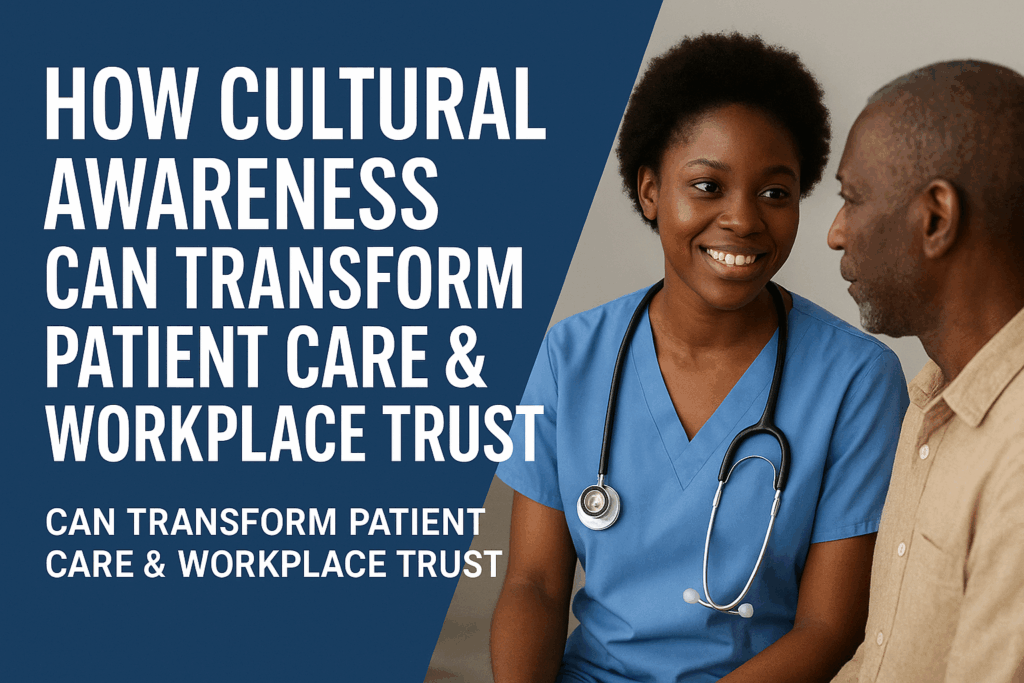
A few weeks ago, I was speaking with a young nurse who shared her frustration: “Sometimes I feel like my patients don’t trust me, not because of my skills, but because they think I don’t understand them.” Her words struck me deeply. It reminded me that in healthcare, competence alone is never enough. Patients want…
The Human Side of Healthcare
At its core, healthcare is about people caring for people. Yet, we often forget that every patient brings with them a story—shaped by their culture, traditions, language, and beliefs. Imagine a patient who hesitates to take medication because of religious fasting, or one who avoids eye contact because in their culture it is a sign of respect. Without cultural awareness, these behaviors might be misinterpreted as resistance, non-compliance, or even rudeness. With cultural awareness, however, we see them as windows into understanding the person more fully.
That shift in perspective changes everything. Instead of conflict, we build connection. Instead of mistrust, we nurture collaboration.
Cultural Awareness Builds Patient Trust
Trust is the currency of patient care. Without it, treatment plans often fail, no matter how advanced the medicine. When patients sense that their provider respects their culture, they are more likely to share openly about their symptoms, concerns, and even fears. This openness allows providers to deliver care that is not only medically sound but also culturally respectful.
Take language, for instance. A simple gesture like offering an interpreter can reduce anxiety and make patients feel valued. Similarly, learning how different cultures view health, pain, or family involvement can transform the care experience. These small steps, rooted in awareness, go a long way in building the kind of trust that heals.
The Ripple Effect in the Workplace
Cultural awareness doesn’t just benefit patients; it transforms the workplace too. In today’s diverse healthcare teams, colleagues often come from different cultural backgrounds. Misunderstandings—sometimes as simple as differing communication styles—can lead to tension and erode trust among staff.
But when teams cultivate cultural awareness, the results are powerful. Respect grows, collaboration improves, and conflict decreases. A nurse who understands her colleague’s background may interpret a brief, direct response not as dismissiveness but as a cultural norm. A manager who appreciates cultural values of hierarchy or collectivism can lead more inclusively. Over time, these practices build a culture of trust where every voice feels heard and every contribution matters.
From Awareness to Action
So how do we move from talking about cultural awareness to actually practicing it? Here are three small but impactful steps:
- Listen with curiosity, not judgment. When patients or colleagues behave in ways you don’t immediately understand, pause and ask yourself, “What cultural lens might they be coming from?”
- Learn continuously. Cultural awareness isn’t a one-time training—it’s a lifelong skill. Read, attend workshops, ask respectful questions, and stay open.
- Show humility. You won’t always get it right. Apologizing when you misunderstand someone builds more trust than pretending you know it all.
Why It Matters Now More Than Ever
In a world where diversity is the norm, cultural awareness is not an optional “extra.” It’s a professional necessity. For healthcare providers, it can mean the difference between mistrust and compliance, between stress and satisfaction, between healing and harm. For workplaces, it builds the foundation of trust that keeps teams strong and resilient.
The nurse who felt her patients didn’t trust her was right—skills alone aren’t enough. But the good news is, cultural awareness can be learned, practiced, and deepened over time. And when we do, we don’t just transform patient care—we transform the very culture of healthcare itself.
✨ What about you? Have you experienced a moment when cultural awareness—or the lack of it—changed how you felt about care or work? Share your story in the comments—I’d love to hear from you.
Step Inside RISE™
Career transitions rarely fail for lack of effort. They stall when one thing is missing. Inside RISE is built on the C.A.R.E. Framework™ — the four domains that decide whether your transition succeeds by design, or stalls by default:
Clarity — name exactly who you're becoming, so the search stops feeling scattered.
Architecture — the habits, learning, and routines that hold the change up.
Resources — the energy, wellbeing, and relationships to sustain the climb.
Execution — turn the plan into visible, weekly progress instead of good intentions.
Your diagnostics, the RISE Report, the C.A.R.E. Assessment, and the 90-Day Transition Runway — all in one place. Free, and yours to keep.
Where is your career transition stalling?
Are you struggling to map your next career move, or are you having trouble identifying the right executive advocates to back your transition?
Click here to email me directly and share your context; I read and respond to every message personally.