“The expertise to be an ‘agent orchestrator’ or ‘Chief of Staff for AI’ simply doesn’t exist in the market yet.”
That was a statement from Shweta Maniar in Google Cloud’s May 2026 AI Agent Trends 2026 report.
And buried inside that statement is one of the most important career signals of 2026.
But the truth is this: For many women, especially African professional women, that expertise already exists.
It just has not been named properly.
While the internet keeps telling women to “upskill into AI,” Google Cloud’s report says something different.
The future belongs to people who can:
- Delegate work
- Set goals
- Guide systems
- Make judgment calls
- Check quality and ethics
That is orchestration. And many women have been doing it for years.
The Real 2026 Skill Is Not Technical
The report describes a future in which:
“Every employee — from an entry-level analyst to a senior vice president — becomes a human supervisor of agents.”
The role is less about coding. It is more about:
- Coordination
- Oversight
- Strategy
- Judgment
- Decision-making
This should sound familiar. Strip away the AI vocabulary, and this starts sounding less like a brand-new career category and more like the lived reality of senior leadership in multinational environments.
Many women already lead teams, manage vendors, solve conflicts, and make difficult decisions across cultures and systems.
The work is not new. The language is.
Consider a senior professional woman with 17 years across pharma, telecoms, and consulting.
In a normal week, she may:
- Coordinate external vendors across multiple markets
- Align cross-functional teams around quarterly outcomes
- Navigate regulatory ambiguity
- Translate between local realities and multinational expectations
- Review major decisions for ethical, reputational, and operational risk
- Carry outcome accountability for systems she does not fully control
By Google Cloud’s own definition, she is already running orchestration systems.
But because her expertise has been institutionally anchored to her current title, she still sees herself through the language of the old role.
This is the strategic blind spot.
The women most at risk in 2026 are not the least capable. Often, they are the most experienced. The risk is that their credibility remains attached to the container they built their careers inside rather than the portable expertise underneath it.
They are trying to defend the role they have instead of positioning for the role that is forming.
5 Orchestration Skills You’re Already Running
1. Delegation Under Pressure
Google Cloud Report says orchestrators must decide which tasks go where.
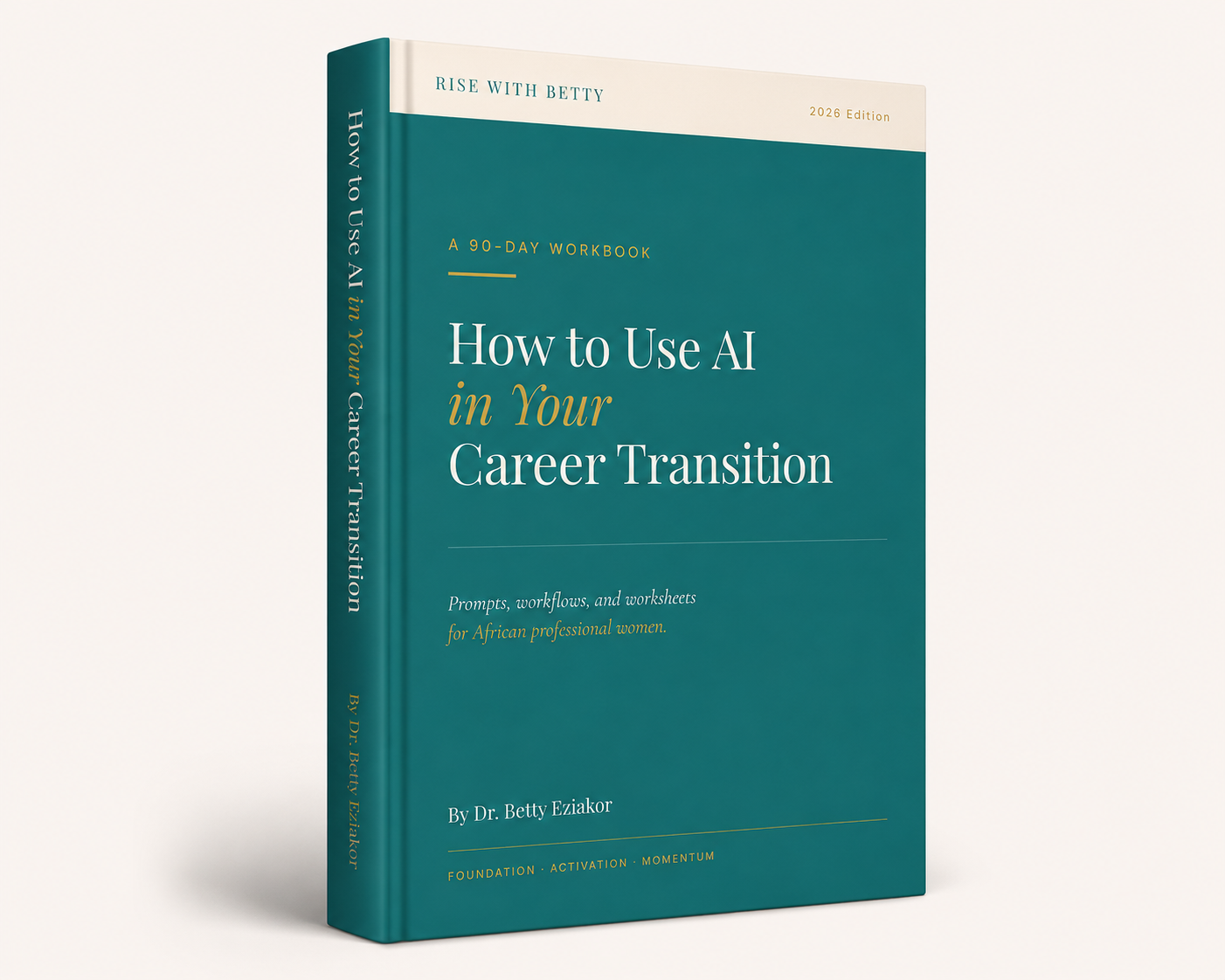
How To Use AI in Your Career Transition
AI can write your emails. It can build your slides in seconds. But can it move your career forward? In the right hands — yes. That's exactly what The RISE AI Transition Workbook is built to do. It's a 90-day, fillable toolkit and prompt library that turns AI into your personal transition strategist, walking you, step by step, from foundation to momentum.
Get Your Copy →Women already do this daily. You decide:
- Which team handles what
- Which vendor can deliver
- Which issue needs escalation
- Which stakeholder needs attention
That is not basic management. That is strategic coordination.
Especially in African corporate contexts, where reporting lines, authority structures, and execution realities are often more fluid than Western leadership literature assumes, this becomes a highly sophisticated orchestration capability.
Renaming Move
Stop saying:
“I manage operations.”
Start saying:
“I lead cross-functional execution.”
The role is being defined now. The language matters now.
2. Owning Results Across Complex Systems
Google Cloud Report says orchestrators define outcomes.
Many women already carry outcome responsibility across systems they do not fully control.
You may already own:
- Revenue targets
- Compliance
- Brand reputation
- Regional delivery
- Client trust
That is high-level leadership.
Renaming Move
Instead of:
“I supervised teams.”
Say:
“I owned business outcomes across multiple markets.”
One sounds administrative.
The other sounds strategic.
3. Human Judgment AI Cannot Replace
This is where the Google Cloud report becomes especially revealing. It admits AI still needs human judgment.
Humans will still need to guide agents and make the nuanced decisions AI cannot make. This matters.
Because many women already make decisions involving:
- Ethical trade-offs
- Cultural complexity
- Relationships and Interpersonal trust
- Institutional politics
- Reputation
- Long-term impact
AI cannot fully replace this.
Renaming Move
Stop reducing decades of leadership judgment to “experience.” Frame it as:
- Strategic judgment capacity
- High-context organisational navigation
- Ethical leadership
- Executive-level risk interpretation
Different language changes perceived value.
4. Quality and Ethical Oversight
The Google Cloud Report says humans will remain responsible for quality control.
Many women already serve as the final checkpoint before decisions go public.
Before proposals leave the building.
Before partnerships are approved.
Before public statements are released.
Before regulatory exposure becomes reputational damage.
You already review work for:
- Long-term institutional consequence
- Risk
- Compliance
- Cultural appropriateness
- Political sensitivity
This is becoming a major AI-era leadership skill.
Renaming Move
Position yourself around:
- AI governance
- Ethical oversight
- Quality assurance leadership
- Regulated-industry advisory
The women who position themselves early in this conversation will shape how these roles evolve.
5. Cross-System Translation
This may be the most valuable skill of all.
Google Cloud’s report discusses emerging protocols that allow AI agents to communicate across organisational and technological boundaries.
But many women have already spent years doing the human version of this work. They already translate between:
- HQ and local teams
- Technical and business teams
- Regulators and executives
- Different cultures and stakeholders
You help systems work together. That is orchestration.
It is the invisible layer that allows large systems to function coherently under complexity.
Renaming Move
Name it directly:
- Cross-cultural leadership
- Systems integration
- Strategic stakeholder alignment
The market increasingly rewards people who can reduce friction across fragmented systems.
Many women have already spent careers doing exactly that.
The Window Is Small
The important part of Google Cloud’s report is this: The role is still forming.
That means there is still time to shape how the market sees this expertise.
Within the next 12–24 months, these roles will likely become:
- Formal job titles
- New leadership tracks
- New salary categories
The women who name their expertise now will have an advantage.
The women who wait may end up applying for roles they were already qualified to lead.
This is not just an AI conversation.
It is a positioning conversation.
Many African professional women already have the core skills the future market wants.
The challenge is not learning completely new abilities.
The challenge is learning how to name, position, and communicate the value of what you already do.
I read every reply personally. What invisible expertise do you think experienced women bring into the AI era that people still underestimate?
Step Inside RISE™
Career transitions rarely fail for lack of effort. They stall when one thing is missing. Inside RISE is built on the C.A.R.E. Framework™ — the four domains that decide whether your transition succeeds by design, or stalls by default:
Clarity — name exactly who you're becoming, so the search stops feeling scattered.
Architecture — the habits, learning, and routines that hold the change up.
Resources — the energy, wellbeing, and relationships to sustain the climb.
Execution — turn the plan into visible, weekly progress instead of good intentions.
Your diagnostics, the RISE Report, the C.A.R.E. Assessment, and the 90-Day Transition Runway — all in one place. Free, and yours to keep.
Where is your career transition stalling?
Are you struggling to map your next career move, or are you having trouble identifying the right executive advocates to back your transition?
Click here to email me directly and share your context; I read and respond to every message personally.